



Top Stories at CEREA
-
The 1st Street-in-Grid (SinG) Modeling Symposium and the 2nd SinG Model Training Workshop (May 24-25, 2018, Beijing, China)
-
Book publication by Christian Seigneur:
C. Seigneur. Pollution atmosphérique - Concepts, théorie et application, 384 pp., Paris, Belin, 2018.
-
Street-in-Grid Modeling Training (January 29, 2018 to February 9, 2018)
Information: Youngseob Kim (youngseob.kim@enpc.fr)
Street-in-Grid model (SinG) is a new multi-scale model of urban air pollution (Kim et al., 2018). SinG dynamically combines an Eulerian model (Polair3D) with a street-network model (MUNICH). This combined model aims at improving urban street-level pollutant concentrations by modeling both background and street-level concentrations at the same time. The model development has been conducted in Centre d'Enseignement et de Recherche en Environnement Atmosphérique (CEREA), joint laboratory of Ecole des Ponts ParisTech and EDF R&D by funding of EDF R&D and EDF R&D China. Its first application has been realized over the Paris region. This training covers topics including SinG concept, how to set up the configurations for a test simulation and how to generate input data.
-
Wednesday, September 20, 2017, 2 pm: Jean Thorey will defend his PhD thesis.
Title: Ensemble forecasting using sequential aggregation for photovoltaic power applications
Location : Room 101, corridor 15-25, UPMC, 4 place Jussieu 75005 Paris
Jury:
- Isabelle Herlin, Director of research (INRIA), supervisor
- Vivien Mallet, Researcher (INRIA), co-supervisor
- Liliane Bel, Professor (AgroParisTech), reviwer
- Jochen Broecker, Professor (Université de Reading), reviewer
- Petra Friederichs, Professor (Université de Bonn), referee
- Olivier Mestre, Research scientist (Météo-France), referee
- Olivier Wintenberger, Professor (Université Pierre et Marie Curie), referee
- Christophe Chaussin, Research engineer (EDF R&D), co-supervisor
Summary:
-
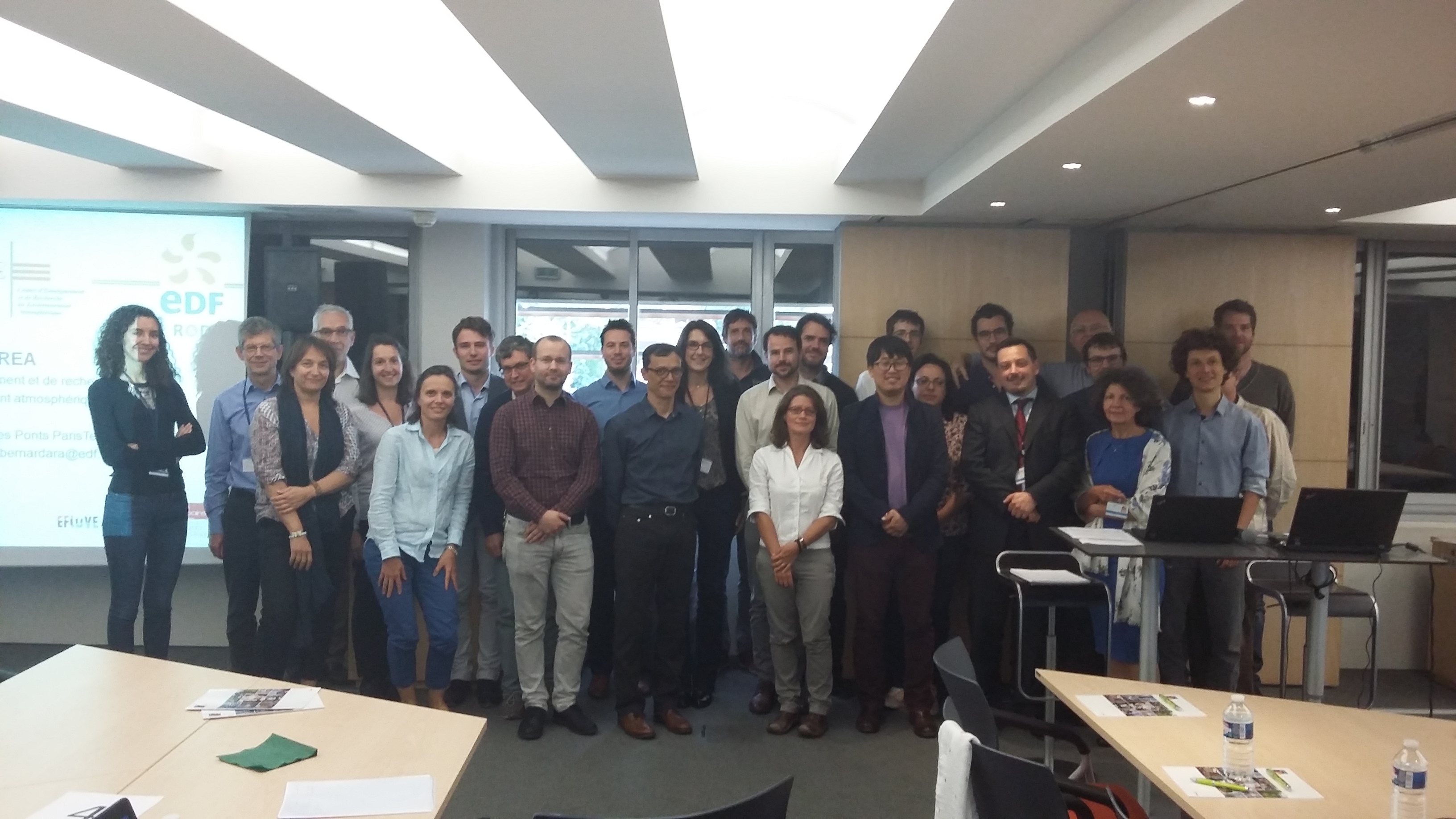
Atmospheric Modeling Workshop (September 11 2017)
Theme: EDF Group's skills, challenges and needs
-
Friday, February 3, 2017, 2 pm: Nicolas CHERIN will defend his PhD thesis.
Title: Modeling atmospheric deposition fluxes of lead and cadmium at urban scale
Location : Room B202, Building Carnot, Ecole Nationale des Ponts et Chaussées, 6-8 avenue Blaise Pascal Cité Descartes Champs-sur-Marne 77455 Marne la Vallée
Jury:
- Dr. Valéry Masson, Centre national de recherches météorologiques (CNRM), reviewer
- Dr. Denis Maro, Institut de radioprotection et de sûreté nucléaire (IRSN), reviewer
- Dr. Véronique Ruban, Institut français des sciences et technologies des transports, de l'aménagement et des réseaux (IFSTTAR), referee
- Pr. Isabelle Coll, Laboratoire interuniversitaire des systèmes atmosphériques (LISA), referee
- Dr. Yelva Roustan, CEREA, co-supervisor
- Pr. Christian Seigneur, CEREA, supervisor
- Olivier Perrussel, Airparif, guest
Summary:
-
Book publication by Marc Bocquet:
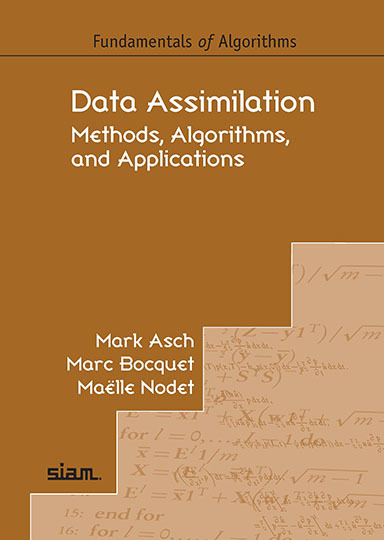
Asch, M., M. Bocquet, M. Nodet. Data Assimilation – Methods, Algorithms, and Applications, 306 pp., SIAM, 2016.
-
Tuesday 13 December 2016: Charbel ABDALLAH will defend his PhD thesis.
Title: Evaluation of emissions and air quality modeling in Beirut and Lebanon
Location : Room F206, Building Coriolis Ecole Nationale des Ponts et Chaussées, 6-8 avenue Blaise Pascal Cité Descartes Champs-sur-Marne 77455 Marne la Vallée
Jury:
- Mme LOCOGE Nadine, Rapporteur, Professeur, Ecole des Mines de Douai
- Mme KANAKIDOU Maria, Rapporteur, Professeur, Université de Crète
- M. SEIGNEUR Christian, Examinateur, Professeur, Centre d'Enseignement et de Recherche en Environnement Atmosphérique (CEREA)
- M. BEEKMANN Matthias, Examinateur, Directeur de recherche, Laboratoire Interuniversitaire des Systèmes Atmosphériques (LISA)
- Mme SARTELET Karine, Directrice de these, Chargé de recherche, Centre d'Enseignement et de Recherche en Environnement Atmosphérique (CEREA)
- M. AFIF Charbel, Co-directeur de these, Maître de conférences, Université Saint Joseph
Summary:
-
Thursday 30 Juin at 14:00 pm: Janusz Zysk will defend his PhD thesis.
Title: Modelling of Modelling of atmospheric transport of heavy metals emitted from Polish power sector
Location:
AGH University of Science and Technology, Krakow, PolandJury:
- Suwała Wojciech, prof. dr hab. inż. Dean (chairman)
- Porada Stanisław, dr hab.
- Czepirski Leszek, prof. dr hab.
- Filipowicz Mariusz, dr hab. inż.
- Fornalik-Wajs Elżbieta, dr hab. inż.
- Gołaś Janusz, prof. dr hab.
- Kubica Barbara, dr hab.
- Milewska-Duda Janina, prof. dr hab. inż.
- Olkuski Tadeusz, dr hab. inż.
- Strugała Andrzej, dr hab. inż.
- Szmyd Janusz, prof. dr hab. inż.
- Siepak Jerzy, prof. dr hab. inż. (reviewer)
- Jakubowska Małgorzata, dr hab. (reviewer)
- Christian Seigneur prof. dr hab inz. (thesis supervisor)
- Yelva Roustan dr (thesis co-supervisor)
-
Marsh 2015: Meissam Bahlali, Ph.D. student at Cerea, has been awarded the "Student of the Year Prize" by EDF (in partenership with Universum). She is recognized for her academic accomplishments, which are consistent with her professional objective, which is to work in the area of energy: internship at Areva, academic training in energy engineering and fluid mechanics in Madrid, major in fluid mechanics at the Grenoble engineering school (ENSE3) and an ongoing Ph.D. thesis at Cerea, with Bertrand Carissimo as advisor. The Universum award ceremony took place on March 29th in Paris, in the presence of the HR representatives of several major French, European and International companies.
-
Friday 24 Mars at 14:00 pm: Xiao WEI will defend her PhD thesis.
Title: Modelling of externally mixed particles in the atmosphere
Location:
Ecole des Ponts ParisTech - Coriolis building - Caquot amphitheater.
6-8 avenue Blaise Pascal, Cité Descartes,
Champs-sur-Marne FR-77455 Marne la ValléeJury:
- M. DUPONT Sylvain, Research Director, INRA (referee)
- Mme CALMET Isabelle, Lecturer, Ecole Centrale de Nantes (referee)
- M. DROBINSKI Philippe, Research Director, Ecole Polytechnique (reviewer)
- M. PERKINS Richard, Professor, Ecole Centrale de Lyon (reviewer)
- M. LACOME Jean-Marc, Doctor, INERIS (reviewer)
- M. CARISSIMO Bertrand, Lecturer, CEREA (thesis supervisor)
Summary:
An experimental program has been designed in order to study pollutants dispersion at a complex site with a focus on stable conditions, which are still challenging for numerical modelling. This experimental program is being conducted at the SIRTA site in a southern suburb of Paris and consists in measuring, in near field, the turbulence and the pollutants dispersion. The aim of this program is to characterize the fine structure of turbulence and associated dispersion through high temporal and spatial resolution measurements. Then, these measurements allow to validate and improve the performance of CFD simulation for turbulence and dispersion in a heterogeneous field. The instrumental set up includes 12 ultrasonic anemometers measuring continuously wind velocity and temperature at 10 Hz, and 6 photo-ionization detectors (PIDs) measuring gas concentration at 50 Hz during tracer tests. Intensive observations periods (IOPs) with gas releases have been performed since March 2012.
First of all, a detailed study of flow on the site is made, because it must be characterised and properly simulated before attempting to simulate the pollutants dispersion. This study is based on two years of continuous measurements and on measurements performed during IOPs. Turbulence strong anisotropy in the surface layer is characterized by calculating variances, integral length scales and power spectra of the three wind velocity components. Propagation of turbulent structures between sensors has been characterized with velocity correlations. Energy spectra show several slopes in different frequency regions. Also, data analyses show impact of terrain heterogeneity on the measurements. The forest to the north of experimental field modifies wind velocity and direction for a large northerly sector. It induces a strong directional wind shear and a wind deceleration below the forest height. Numerical simulations are carried out using the CFD code, Code_Saturne, in RANS mode with a standard k-ε closure adapted for atmospheric flows and a canopy model for the forest. These simulations are shown to reproduce correctly the characteristics of the mean flow on the measurements site, especially the impact of the forest for different wind directions, in both neutral and stable stratification. Simulation results also show the directional wind shear and the turbulent kinetic energy increase induced by the forest. A sensitivity study has been made for various values of forest density and shows that the typical features of canopy flow become more pronounced as canopy density increases.
Pollutant dispersion study is made for several IOPs. Concentration data analysis shows a consistency with previous measurements made in a near-source region where the plume scale is smaller than the large-scale turbulence eddies. Concentration fluctuations are characterized through concentration time series, histogram and statistical analysis. The internal subrange can be observed in the concentration spectra. Next, pollutant dispersion is modelled by transport equations for concentration and its variance. The mean concentrations show a good agreement with measurements in values for all the IOPs studied, except that the position of the concentration peak depends on the accuracy of simulated wind rotation below the forestheight. The concentration fluctuations obtained from simulations seem to be affected significantly by the condition at the source and the modelling of the dissipation term. A sensitivity study to the parametrisation is then presented.
-
Monday 18 January at 14:00 pm: Noëlie DAVIAU will defend her PhD thesis.
Title: Modelling of externally mixed particles in the atmosphere
Location:
Ecole des Ponts ParisTech - Coriolis building - Caquot amphitheater.
6-8 avenue Blaise Pascal, Cité Descartes,
Champs-sur-Marne FR-77455 Marne la ValléeJury:
- M. EL MANKIBI Mohamed, researcher, ENTPE (École Nationale des Travaux Publics de l'État) (referee)
- M. MARTILLI Alberto, researcher, CIEMAT (Centro de Investigaciones Energéticas, Medioambientales y Tecnológicas) (referee)
- M. INARD Christian, Professor, Université de La Rochelle (reviewer)
- M. MOONEN Peter, Professor, Université de Pau et des Pays de l'Adour (reviewer)
- M. ROUX Jean-Jacques, Professor, CETHIL, INSA Lyon (reviewer)
- M. CARISSIMO Bertrand, Lecturer, CEREA (thesis supervisor)
-
Friday 11 December at 14:00 pm: Shupeng Zu will defend his PhD thesis.
Title: Modelling of externally mixed particles in the atmosphere
Location:
Ecole des Ponts ParisTech - Coriolis building - F206 (on the right when entering the hallway, second floor).
6-8 avenue Blaise Pascal, Cité Descartes,
Champs-sur-Marne FR-77455 Marne la ValléeJury:
- Pr. ZHANG Yang, North Carolina State University (referee)
- Pr. RIEMER Nicole, University of Illinois at Urbana-Champaign (referee)
- Pr. WENGER John, University College Cork (reviewer)
- Pr. SEIGNEUR Christian, CEREA/ENPC (reviewer)
- Dr.BESSAGNET Bertrand, INERIS (reviewer)
- Dr. K. SARTELET Karine, CEREA/ENPC (thesis supervisor)
Summary:
This thesis present a newly developed size-composition resolved aerosol model (SCRAM), which is able to simulate the dynamics of externally-mixed particles in the atmosphere, and it evaluates its performance in three-dimensional air-quality simulations. The main work is split into four parts. First, the research context of external mixing and aerosol modelling is introduced. Secondly, the development of the SCRAM box model is presented along with validation tests. Each particle composition is defined by the combination of mass-fraction sections of its chemical components or aggregates of components. The three main processes involved in aerosol dynamic (nucleation, coagulation, condensation/evaporation) are included in SCRAM. The model is first validated by comparisons with published reference solutions for coagulation and condensation/evaporation of internally-mixed particles. The particle mixing state is investigated in a 0-D simulation using data representative of air pollution at a traffic site in Paris. The relative influence on the mixing state of the different aerosol processes and of the algorithm used to model condensation/evaporation (dynamic evolution or bulk equilibrium between particles and gas) is studied. Then, SCRAM is integrated into the Polyphemus air quality platform and used to conduct simulations over Greater Paris during the summer period of 2009. This evaluation showed that SCRAM gives satisfactory results for both PM2.5/PM10 concentrations and aerosol optical depths, as assessed from comparisons to observations. Besides, the model allows us to analyze the particle mixing state, as well as the impact of the mixing state assumption made in the modelling on particle formation, aerosols optical properties, and cloud condensation nuclei activation. Finally, two simulations are conducted during the winter campaign of MEGAPOLI (Megacities : Emissions, urban, regional and Global Atmospheric POLlution and climate effects, and Integrated tools for assessment and mitigation) in January 2010 where the composition of individual particles was measured. One simulation assumes that particles are internally mixed, while the other explicitly models the mixing state with SCRAM. The simulation results of both bulk concentrations of chemical species and concentrations of individual particle classes are compared with the measurements. Then, the single particle diversity and the mixing-state index are computed using a quantification approach based on information-theoretic entropy, and they are compared to those derived from the measurements at a urban site in Paris: the simulated mixing-state index is equal to 69% against 59% from the measurements, indicating that particles are not internally mixed over Paris.
-
October 2015: Shupeng Zhu, Ph.D. student at Cerea, received the Jean Bricart Award from the French Association for Aerosol Research (ASFERA) for his work on the modeling of externally-mixed aerosols. He developed a general model of the dynamics of aerosols resolved in size and chemical composition and applied it to two air pollution episodes over Paris. Karine Sartelet is the thesis advisor.
-
Thursday 18 June at 14:00 pm: Laurent Makké will defend his PhD thesis.
Title: Modélisation 3-D des rétroactions microphysique de l'eau, turbulence, rayonnement dans les nuages bas
Location:
Ecole des Ponts ParisTech - Coriolis building - Caquot amphitheater,
6-8 avenue Blaise Pascal, Cité Descartes,
Champs-sur-Marne FR-77455 Marne la ValléeJury:
- Pr. Richard Fournier, Laboratoire Laplace / Université Toulouse III (referee)
- Dr. Anthony B. Davis, Jet Propulsion Laboratory / California Institute of Technology (referee)
- Dr. Céline Cornet, Laboratoire d'Optique Atmosphérique / Université Lille 1 (reviewer)
- Pr. Jean-Philippe Gastellu-Etchegorry, Laboratoire CESBIO / Université Toulouse III (reviewer)
- Dr. Bertrand Carissimo, Laboratoire CEREA / Ecole des Ponts ParisTech (thesis supervisor)
- Dr. Luc Musson-Genon, Laboratoire CEREA / Ecole des Ponts ParisTech (thesis co-supervisor)
- Dr. Pierre Plion, EDF (guest)
- Dr. Maya Milliez, EDF (guest)
Summary:
Afin de modéliser l'absorption dans le traitement des transferts radiatifs en milieu atmosphérique, de nombreuses méthodes plus précises et plus rapides ont été développées. La modélisation de la formation du brouillard, où le rayonnement infrarouge joue un rôle très important, nécessite des méthodes numériques suffisamment précises pour calculer le taux de refroidissement. Le brouillard radiatif se forme après des conditions de ciel clair, où l'absorption est le processus radiatif dominant, en raison d'un fort refroidissement nocturne. Avec l'augmentation des ressources de calcul et le développement du Calcul Haute Performance, les modèles à bandes étroites, pour effectuer l'intégration sur la longueur des grandeurs radiométriques, sont les plus utilisés. Toutefois, le couplage entre les transferts radiatifs 3-D et la dynamique des fluides reste très coûteux en temps de calcul. Le rayonnement augmente d'environ cinquante pourcent le temps de la simulation pour la dynamique des fluides uniquement. Pour réduire le temps passé dans une itération radiative, une nouvelle paramétrization basée sur les modèles en émissivité a été développée. Cette approche nécessite seulement une résolution de l'ETR contre Nb x Ng résolutions pour un modèle à Nb bandes spectrales et Ng points de quadratures sur chaque bande. Une comparaison avec des données de simulation a été effectuée et cette nouvelle paramétrisation de l'absorption infrarouge a montré sa capacité à prendre en compte les variations des concentrations gazeuses et d'eau liquide. Une étude à travers le couplage entre le modèle développé et le code de CFD Code_Saturne a été réalisée afin valider dynamiquement notre paramétrisation. Enfin une simulation exploratoire a été effectuée sur un domaine 3-D en présence de bâti idéalisé, pour capter les effets radiatifs 3-D dûs aux hétérogénéités horizontales du champ d'eau liquide et des bâtiments.
-
Thursday 20 November at 9:30 am: Vincent Loizeau will defend his PhD thesis.
Title: La prise en compte d'un modèle de sol multi-couches pour la modélisation multi-milieux à l'échelle européenne des polluants organiques persistants
Location :
at ENPC school, 6-8 avenue Blaise Pascal, FR-77455 Champs-sur-Marne, in Navier amphitheater (access ENPC hallway)Summary:
Les polluants organiques persistants (POPs) sont des substances toxiques ayant la capacité de se bioaccumuler le long de la chaîne alimentaire. Une fois émis dans l'atmosphère, ils sont dispersés par le vent puis se déposent au sol. Du fait de leur persistance, ils peuvent être réémis depuis le sol vers l'atmosphère et parcourir ainsi de longues distances. Ce processus est couramment appelé « effet saut de sauterelle ». On peut donc retrouver les POPs très loin de leurs sources d'émissions. Pour pouvoir prendre des décisions visant à réduire leur impact environnemental, il est nécessaire de comprendre leur comportement dans l'atmosphère mais également dans les autres milieux, tels que le sol, la végétation ou l'eau. De nombreux modèles numériques de complexité variable ont été développés dans le but de prédire le devenir des POPs dans l'environnement. La plupart d'entre eux considèrent le sol comme un compartiment homogène, pouvant ainsi mener à une sous-estimation des réémissions du sol vers l'atmosphère. Or, du fait de la mise en place de réglementations visant à réduire les émissions anthropiques des POPs, la concentration dans l'atmosphère tend à diminuer et le sol, qui semblait jusqu'alors être seulement un réservoir, devient une source potentielle de POPs pour l'atmosphère. Il apparaît donc nécessaire de coupler les modèles de dispersion atmosphérique à un modèle de sol réaliste. Mes recherches ont permis d'étudier l'impact des interactions entre le sol et l'atmosphère sur la concentration dans les différents milieux. Pour cela, nous avons développé un modèle de sol multi-couches permettant de mieux estimer le profil de concentration dans le sol et les échanges entre ces deux milieux. Une analyse de sensibilité a été effectuée afin d'identifier les paramètres clés dans la détermination des réémissions. Puis ce modèle a été couplé à un modèle 3D de chimie-transport atmosphérique. Une étude de cas à l'échelle européenne a alors été réalisée afin d'évaluer ce modèle et d'estimer l'impact des réémissions sur les concentrations de POPs dans l'environnement.
-
Friday 4 Jully at 14:00 pm: Masoud Fallah Shorshani will defend his PhD thesis.
Title: Modélisation de l’impact du trafic routier sur la pollution de l’air et des eaux de ruissellement
Location:
Ecole des Ponts ParisTech - Coriolis building - Caquot amphitheater,
6-8 avenue Blaise Pascal, Cité Descartes,
Champs-sur-Marne FR-77455 Marne la ValléeJury:
- Dr Christian Seigneur, CEREA (thesis supervisor)
- Dr Michel André, IFSTTAR (thesis co-supervisor)
- Dr Céline Bonhomme, LEESU (thesis co-supervisor)
- Dr Isabelle Braud, IRSTEA (referee)
- Dr Lionel Soulhac, École Centrale de Lyon (referee)
- Dr Ludovic Leclercq, IFSTTAR (reviewer)
- Dr Frédéric Mahé, AIRPARIF (reviewer)
- Dr Guido Petrucci, Vrije Universiteit Brussel (reviewer)
Summary:
Road traffic emissions are a major source of pollution in cities. Modeling of air and stormwater pollution due to on-road vehicles is essential to understand the processes that lead to the pollution and provide the necessary information for the development of effective public policy in order to reducing pollution. This thesis aimed to evaluate the feasibility and relevance of chain models to simulate the impact of road traffic on air and stormwater pollution. The first part was to achieve a state of the art modeling tools for different phenomena (traffic, emissions, atmospheric dispersion, and stormwater), highlighting the integration of the different models to to create a coherent chain in terms of pollutants and spatio-temporal scales. Two examples of modeling chain have been proposed, one static with hourly time-step, the second considering a dynamic approach to traffic and associated pollution. In the second part of the thesis, different interface tools have been developed to link the models in the modeling chains. These modeling chains were tested with different case studies : (1) coupling traffic / emissions with a simulation of an urban street using a dynamic model of traffic with instantaneous and averaged emission models (2) coupling emissions / air pollution along a freeway , (3) couplings traffic / emissions / air pollution near a freeway, (4) coupling emissions / air pollution in suburban neighborhood (5) coupling atmospheric deposition / stormwater quality for a urban catchment, and finally (6) a complete modeling chain with traffic / emissions / air and stormwater quality models for urban catchment drainage. This work allows to identify different possibility of models integration for calculate the air and stormwater pollution due to road traffic in urban areas. Moreover, they provide a solid basis for the future development of integrated numerical models of urban pollution.
-
wednesday 14 May at 14h00: Venkatesh Duraisamy Jothiprakasam will defend his PhD thesis.
Title: Downscaling the wind energy resources in complext terrain using a coupled mesoscale/microscale CFD modeling system including wake effect
Locations: :
Ecole des Ponts ParisTech - Coriolis building - Caquot amphitheater,
6-8 avenue Blaise Pascal, Cité Descartes,
Champs-sur-Marne FR-77455 Marne la ValléeJury:
- Pr. François CAUNEAU, École des Mines de Paris, referee and jury president
- Pr. Jeroen VAN BEECK, The Von Karman Institute for Fluid Dynamics (referee)
- Dr. Javier SANZ RODRIGO, CENER (reviewer)
- Dr. Bertrand Carissimo, CEREA/EDF (directeurs de thèse)
- Dr. Eric DUPONT, CEREA/EDF (codirecteurs de thèse)
Summary:
The development of wind energy generation requires precise and well established methods for wind resource assessment, which is the initial step in every wind farm project. During the last two decades linear flow models were widely used in the wind industry for wind resource assessment and micro siting. But the linear models inaccuracies in predicting the wind speeds in very complex terrain are well known and led to use of CFD, capable of modeling the complex flow in details around specific geographic features. Mesoscale models (NWP) are able to predict the wind regime at resolutions of several kilometers, but are not well suited to resolve the wind speed and turbulence induced by the topography features on the scale of a few hundred meters. CFD has proven successful in capturing flow details at smaller scales, but needs an accurate specification of the inlet conditions. Thus coupling NWP and CFD models is a better modeling approach for wind energy applications.
A one year field measurement campaign carried out in a complex terrain in southern France during 2007-2008 provides a well documented data set both for input and validation data. The proposed new methodology aims to address two problems: the high spatial variation of the topography on the domain lateral boundaries, and the prediction errors of the mesoscale model. It is applied in this work using the open source CFD code Code_Saturne, coupled with the mesoscale forecast model of Météo-France (ALADIN). The improvement is obtained by combining the mesoscale data as inlet condition and field measurement data assimilation into the CFD model. Newtonian relaxation (nudging) data assimilation technique is used to incorporate the measurement data into the CFD simulations. The methodology to reconstruct long term averages uses a clustering process to group the similar meteorological conditions and to reduce the number of CFD simulations needed to reproduce 1 year of atmospheric flow over the site. The assimilation procedure is carried out with either sonic or cupanemometers measurements. First a detailed analysis of the results obtained with the mesoscale-CFD coupling and with or without data assimilation is shown for two main wind directions, including a sensitivity study to the parameters involved in the coupling and in the nudging. The last part of the work is devoted to the estimate of the wind potential using clustering. A comparison of the annual mean wind speed with measurements that do not enter the assimilation process and with the WAsP model is presented. The improvement provided by the data assimilation on the distribution of differences with measurements is shown on the wind speed and direction for different configurations.
-
Tuesday 4 Marsh at 14:00 pm: Victor Winiarek will defend his PhD thesis.
Title: Atmospheric dispersion and inverse modeling for the reconstruction of accidental sources of pollutants
Location:
Ecole des Ponts ParisTech - Coriolis building - Caquot amphitheater,
6-8 avenue Blaise Pascal, Cité Descartes,
Champs-sur-Marne FR-77455 Marne la ValléeJury:
- Dr Marc Bocquet (thesis supervisor)
- Dr Bertrand Carissimo (thesis supervisor)
- Dr Olivier Thual, Université de Toulouse/INPT (referee)
- Dr Philippe Bousquet, UVSQ/LSCE (referee)
- Dr Anne Mathieu, IRSN/BMTA (reviewer)
- Dr Lionel Soulhac, ECL/LMFA (reviewer).
Summary:
Uncontrolled releases of pollutant in the atmosphere may be the consequence of various situations : accidents, for instance leaks or explosions in an industrial plant, or terrorist attacks such as biological bombs, especially in urban areas. In the event of such situations, authorities’ objectives are various : predict the contaminated zones to apply first countermeasures such as evacuation of concerned population; determine the source location; assess the long-term polluted areas, for instance by deposition of persistent pollutants in the soil.
To achieve these objectives, numerical models can be used to model the atmospheric dispersion of pollutants. We will first present the different processes that govern the transport of pollutants in the atmosphere, then the different numerical models that are commonly used in this context. The choice between these models mainly depends of the scale and the details one seeks to take into account.
We will then present the general framework of inverse modeling for the estimation of source. Inverse modeling techniques make an objective balance between prior information and new information contained in the observation and the model. We will show the strong dependency of the source term estimation and its uncertainty towards the assumptions made on the statistics of the prior errors in the system. We propose several methods to estimate rigorously these statistics. We will apply these methods on different cases, using either synthetic or real data : first, a semi-automatic algorithm is proposed for the operational monitoring of nuclear facilities. The second and third studies concern the source term estimation of the accidental releases from the Fukushima Daiichi nuclear power plant.
Concerning the localization of an unknown source of pollutant, two strategies can be considered. On one hand parametric methods use a limited number of parameters to characterize the source term to be reconstructed. To do so, strong assumptions are made on the nature of the source. The inverse problem is hence to estimate these parameters. On the other hand non-parametric methods attempt to reconstruct a full emission field. Several parametric and non-parametric methods are proposed and evaluated on real situations at a urban scale, with a CFD model taking into account buildings influence on the air flow. In these experiments, some proposed methods are able to localize the source with a mean error of some meters, depending on the simulated situations and the inverse modeling methods.
-
Friday 20 December at 9h30: Yiguo Wang will defend his PhD thesis.
Title: Une nouvelle approche de modélisation de la qualité de l’air à l’échelle régionale par assimilation de mesures lidar
Location:
Ecole des Ponts ParisTech - Coriolis building - F206 room,
6-8 avenue Blaise Pascal, Cité Descartes,
Champs-sur-Marne FR-77455 Marne la ValléeJury:
- Dr Patrick Chazette CEA, LSCE (thesis supervisor)
- Dr Marc Bocquet ENPC, CEREA (thesis co-supervisor)
- Dr Karine Sartelet ENPC, CEREA (thesis co-supervisor)
- Dr. Beekmann Matthias CNRS, LISA (referee)
- Dr Pierre Tulet CNRS, LACy (referee)
- Pr Hervé Le Treut IPSL, LMD (reviewer)
- Pr Bertrand Calpini MeteoSwiss (reviewer)
- Dr Alain Dabas Météo-France, CNRM (reviewer)
-
Tuesday 10 December, 2013 at 14:00 pm: Ève Lecoeur will defend her PhD thesis.
Title: Influence de l'évolution climatique sur la qualité de l'air en Europe
Location:
Ecole des Ponts ParisTech - Coriolis building - Caquot amphitheater,
6-8 avenue Blaise Pascal, Cité Descartes,
Champs-sur-Marne FR-77455 Marne la ValléeJury:
- Pr. Christian Seigneur, CEREA, Marne-la-Vallée, thesis supervisor and jury president
- Dr. Laurent Terray, CERFACS, Toulouse (co-supervisor)
- Dr. Virginie Marécal, Météo-France, Toulouse (referee)
- Dr. Pascal Yiou, IPSL/LSCE, Gif-sur-Yvette (referee)
- Dr. Isabelle Bey, ETH Zürich, Zürich (reviewer)
- Pr. Robert Rosset, Laboratoire d'Aérologie, Toulouse (reviewer)
- Dr. Julien Najac, EDF R&D, Chatou (reviewer)
Summary:
Air pollution is the result of high emissions of pollutants (and pollutant precursors) and unfavorable meteorological conditions. Fine particulate matter (PM2.5) is one of the pollutants of great concern for human health. Every year, a repeated or continuous exposure to such particles is responsible for respiratory and cardiovascular diseases among the concerned populations and leads to premature deaths. Climate change is expected to impact meteorological variables (temperature, wind, precipitation, ...). Those variables will influence numerous factors, which will affect air quality (emissions, precipitation scavenging, gas/particle equilibrium, ...). A large body of studies have already investigated the effects of climate change on ozone, whereas only a few have addressed its effects on PM2.5 concentrations, especially over Europe. This is the subject we investigate in this thesis.
Large-scale circulation is closely linked to surface meteorological variables. Therefore, it is expected that it will impact PM2.5 concentrations too. In this thesis, we develop a statistical algorithm to estimate future PM2.5 concentrations from present PM2.5 observations, selected meteorological variables and tools to represent this circulation (weather regimes and weather types). The lack of daily observations of PM2.5 and its components over Europe prevents us to used observations. Consequently, we have created a pseudo-observed PM2.5 data set, by using the Polyphemus/Polair3D air quality Chemical-Transport Model. Both operational and dynamic evaluations were conducted against EMEP measurements, to ensure that the influence of meteorological variables on PM2.5 concentrations is correctly reproduced by the model. As far as we know, this dynamic evaluation of an air quality model with respect to meteorology is the first conducted to date.
The statistical method developed in this thesis is a new approach to estimate the impact of climate and climate change on PM2.5 concentrations over Europe. Despite some uncertainties, this approach is easily applicable to different models and scenarios, as well as other geographical regions and other pollutants. Using observations to establish the pollutant-meteorology relationship would make this approach more robust.
-
Monday 1st July, 2013 at 14:30 pm: Karim Drifi will defend his PhD thesis.
Title: Estimation du mouvement par assimilation de données dans des modèles dynamiques d'ordre réduit.
Location: Paris facility of Inria Rocquencourt,
23 avenue d'Italie 75013 Paris (subway station "place d'italie", "tolbiac" or "Olympiades"), in the Orange room.Jury:
- Pr. Isabelle Herlin, INRIA Rocquencourt, thesis supervisor and jury president
- Pr. Didier Auroux, Université de Nice Sophia Antipolis (referee)
- Dr. Erwan Le Pennec, INRIA Saclay / Projet SELECT (referee)
- Pr. Dominique Béréziat, maitre de conférence Université Pierre-et-Marie-Curie (reviewer)
- Pr. Etienne Mémin, INRIA Rennes (reviewer)
Summary:
Motion estimation is a major challenge in the field of image sequence processing. The thesis is a study of the dynamics of geophysical flows visualized by satellite imagery. Satellite image sequences are currently underused for the task of dynamics estimation. A good understanding of geophysical flows allows a better analysis and forecast of phenomena in domains such as oceanography and meteorology. Data assimilation provides an excellent framework for achieving a compromise between heteorogenous data, especially numerical models and observations.
Hence, in this thesis we set out to apply variational data assimilation methods, such as 4D-Var, to estimate motion in image sequences. Asmajor drawbacks of applying 4D-Var are the considerable computation time and memory required, we define and use a model reduction method in order to significantly decrease the necessary computation time and memory. We then explore the possibilities that reduced models provide for motion estimation, particularly the possibility of strictly imposing some known constraints on the computed solutions. Different kinds of reductions are discussed, using a proper orthogonal decomposition, a sine basis for divergence-free motion and a basis dedicated to a particular spatial domain. In each case, results are presented on both synthetic and satelitte data.
-
Friday 14 june at 14:00 pm: Cédric Dall'Ozzo will defend his PhD thesis.
Title: Modélisation d'écoulements atmosphériques stratifiés par simulation des grandes échelles à l'aide de Code_Saturne.
Location: 19, rue Alfred Nobel, FR-77420 Champs-sur-Marne, in Freyssinet amphitheater (Nobel buildings)
Jury:
- Pr. DUPONT Sylvain, research director, INRIA (referee)
- Pr. STAQUET Chantal, Professeur des universiés, Université Joseph Fourier - Grenoble I (referee)
- Pr. SAGAUT Pierre Professeur des universités, Classe exceptionnelle, Université Pierre et Marie Curie - Paris 6 (reviewer)
- Pr. CALMET Isabelle, Maitre de conférences, Ecole Centrale de Nantes (reviewer)
- Pr. LAURENCE Dominique, Professor at University of Manchester (reviewer)
- Dr. CARISSIMO Bertrand, CEREA (thesis supervisor)
- Dr. MILLIEZ Maya, CEREA (thesis co-supervisor)
Summary:
Large-eddy simulation (LES) of the physical processes in the atmospheric boundary layer (ABL) remains a complex subject. LES models have difficulties to capture the evolution of the turbulence in different conditions of stratification. Consequently, LES of the whole diurnal cycle of the ABL including convetive situations in daytime and stable situations in the nighttime is seldom documented. The simulation of the stable atmospheric boundary layer which is characterized by small eddies and by weak and sporadic turbulence is espacialy difficult. Therefore The LES ability to well reproduce real meteorological conditions, particularly in stable situations, is studied with the CFD code developed by EDF R&D, Code_Saturne.
The first study consist in validate LES on a quasi-steady state convective case with homogeneous terrain. The influence of the subgrid-scale models (Smagorinsky model, Germano-Lilly model, Wong-Lilly model and Wall-Adapting Local Eddy-viscosity model) and the sensitivity to the parametrization method on the mean fields, flux and variances are discussed.
In a second study, the diurnal cycle of the ABL during Wangara experiment is simulated. The deviation from the measurement is weak during the day, so this work is focused on the difficulties met during the night to simulate the stable atmospheric boundary layer. The impact of the different subgrid-scale models and the sensitivity to the Smagorinsky constant are been analysed. By coupling radiative forcing with LES, the consequences of infra-red and solar radiation on the nocturnal low level jet and on thermal gradient, close to the surface, are exposed. More, enhancement of the domain resolution to the turbulence intensity and the strong atmospheric stability during the Wangara experiment are analysed. Finally, a study of the numerical oscillations inherent to Code_Saturne is realized in order to decrease their effects.
-
Friday 5 April, 2013 at 9:30 am: Karine Sartelet will defend her « habilitation à diriger des recherches » (HDR)
Title:: Regional air quality modeling
Location: 19, rue Alfred Nobel, FR-77420 Champs-sur-Marne, in Freyssinet amphitheater (Nobel buildings)
Jury:
- Pr Hiroshi Hayami, CRIEPI, Japan (reviewer)
- Dr Céline Mari, Laboratoire d’aérologie, Toulouse (reviewer)
- Pr Robert Rosset, Laboratoire d’aérologie, Université de Toulouse (reviewer)
- Dr Matthias Beekmann, LISA, UPEC (examiner)
- Dr Solène Turquety, LMD (examiner)
- Pr Christian Seigneur, CEREA, Université Paris-Est (HDR director)
-
On December 20th, 2012 at 14h00: Mohammad Reza Koohkan will defend his PhD thesis
Title: Multiscale data assimilation approaches and error characterisation applied to the inverse modelling of atmospheric constituent emission fields.
Location: 19, rue Alfred Nobel, FR-77420 Champs-sur-Marne, in Freyssinet amphitheater (Nobel buildings)
Jury:
- Dr. Olivier Talagrand, CNRS/LMD (president)
- Dr. Frédéric Chevallier, CEA/LSCE (referee)
- Dr. Slimane Bekki, CNRS/LATMOS (referee)
- Dr. Gilles Forêt, UPEC/LISA (reviewer)
- Dr. Sébastien Massart, ECMWF (reviewer)
- Dr. Marc Bocquet, École des Ponts ParisTech/CEREA (thesis director)
Summary: Data assimilation in geophysical sciences aims at optimally estimating the state of the system or some parameters of the system?s physical model. To do so, data assimilation needs three types of information : observations and background information, a physical/numerical model, and some statistical description that prescribes uncertainties to each componenent of the system. In my dissertation, new methodologies of data assimilation are used in atmospheric chemistry and physics : the joint use of a 4D-Var with a subgrid statistical model to consistently account for representativeness errors, accounting for multiple scale in the BLUE estimation principle, and a better estimation of prior errors using objective estimation of hyperparameters. These three approaches will be specifically applied to inverse modelling problems focussing on the emission fields of tracers or pollutants.
First, in order to estimate the emission inventories of carbon monoxide over France, in-situ stations which are impacted by the representativeness errors are used. A subgrid model is introduced and coupled with a 4D-Var to reduce the representativeness error. Indeed, the results of inverse modelling showed that the 4D-Var routine was not fit to handle the representativeness issues. The coupled data assimilation system led to a much better representation of the CO concentration variability, with a significant improvement of statistical indicators, and more consistent estimation of the CO emission inventory.
Second, the evaluation of the potential of the IMS (International Monitoring System) radionuclide network is performed for the inversion of an accidental source. In order to assess the performance of the global network, a multiscale adaptive grid is optimised using a criterion based on degrees of freedom for the signal (DFS). The results show that several specific regions remain poorly observed by the IMS network.
Finally, the inversion of the surface fluxes of Volatile Organic Compounds (VOC) are carried out overWestern Europe using EMEP stations. The uncertainties of the background values of the emissions, as well as the covariance matrix of the observation errors, are estimated according to the maximum likelihood principle. The prior probability density function of the control parameters is chosen to be Gaussian or semi-normal distributed. Grid-size emission inventories are inverted under these two statistical assumptions. The two kinds of approaches are compared. With the Gaussian assumption, the departure between the posterior and the prior emission inventories is higher than when using the semi-normal assumption, but that method does not provide better scores than the semi-normal in a forecast experiment.
-
On December 14th, 2012 at 14h00: Hilel Dergaoui will defend his PhD thesis
Title: Coagulation d'une population d'aérosols en mélange externe: modélisation et expériences.
Location: at ENSG school, 6-8 avenue Blaise Pascal, FR-77455 Champs-sur-Marne, in Picard amphitheater (access ENSG hallway)
Jury:
- Pr. Laurence LE COQ, École des Mines de Nantes (referee)
- Dr. Laurent MENUT, Laboratoire de Météorologie Dynamique (referee)
- Pr. Robert ROSSET, Laboratoire d'Aérologie, Université de Toulouse (reviewer)
- Pr. Jean-François DOUSSIN, LISA, Université Paris-Est (reviewer)
- Dr. Olivier LE BIHAN, INERIS (reviewer)
- Dr. Édouard DEBRY, INERIS (thesis co-supervisor)
- Dr. Karine SARTELET, École des Ponts ParisTech, CEREA (thesis co-supervisor)
- Pr. Christian SEIGNEUR, École des Ponts ParisTech, CEREA (thesis director)
-
On November 23th, 2012 at 14h00: Marion Devilliers will defend his PhD thesis
Title: Modeling and numerical simulation of the dynamics of nanoparticles applied to free and confined atmospheres.
Location: at ENSG school, 6-8 avenue Blaise Pascal, FR-77455 Champs-sur-Marne, in Picard amphitheater (access ENSG hallway)
Jury:
- Robert ROSSET, LA, Toulouse (president)
- Virginie MARECAL, CNRM-GAME, Toulouse (referee)
- Olivier SIMONIN, INPT/IMFT, Toulouse (referee)
- Matthias BEEKMANN, LISA, Créteil (reviewer)
- Didier HAUGLUSTAINE, LSCE/LIVE, Gif-sur-Yvette (reviewer)
- Pr. Christian SEIGNEUR, École des Ponts ParisTech, CEREA, Marne-La-Vallée (thesis director)
- Edouard DEBRY, INERIS, Verneuil-en-Halatte (thesis supervisor)
Summary: Nanoparticle technology is undergoing constant development in the industry and air quality measurements reveal an increasing presence of nanoparticles in the ambient air. These particles, which have a characteristic dimension lower than 100 nm, are also called ultra fine particles (UFPs). Current scientific knowledge regarding nanoparticles is still incomplete, which raises new questions for human health and the environment.
These particles constitute the lower part of the size distribution of atmospheric particles. They contribute little to the mass concentrations of PM2.5 and PM10 (atmospheric particles which aerodynamic diameter is lower than 2.5 or 10 microns, respectively), but they represent the quasi-totality of the number concentration.
Several studies have identified various emission and formation sources of nanoparticles in indoor and outdoor air. Studies have also shown that, because of their small size, these particles can cross the physiological lung barrier and subsequently penetrate very deeply into the human body. Furthermore, by penetrating fungal, animal, plant or microbial bodies, nanoparticles may change via bioaccumulation the evolution of ecosystems. Effects on the properties of clouds have also been brought to light.
Currently, most indicators and air quality models focus on the mass concentration. However, the forthcoming regulatory indicators with respect to nanoparticles are likely to consider the number concentration, their relevant quantity. Thus, it is necessary to adapt existing models in order to simulate the number concentration, and correctly account for nanoparticles, in both free and confined atmospheres.
A model of particle dynamics capable of following accurately the number as well as the mass concentration of particles, with an optimal calculation time, has been developed.
The dynamics of particles depends on various processes, the most important ones being condensation/evaporation, followed by nucleation, coagulation, and deposition phenomena. These processes are well-known for fine and coarse particles, but some additional phenomena must be taken into account when applied to nanoparticles, such as the Kelvin effect for condensation/evaporation and the van der Waals forces for coagulation.
This work focused first on condensation/evaporation, which is the most numerically challenging process. Particles were assumed to be of spherical shape. The Kelvin effect has been taken into account as it becomes significant for particles with diameter below 50 nm. The numerical schemes are based on a sectional approach: the particle size range is discretized in sections characterized by a representative diameter. A redistribution algorithm is used, after condensation/evaporation occurred, in order to keep the representative diameter between the boundaries of the section. The redistribution can be conducted in terms of mass or number. The key point in such algorithms is to choose which quantity has to be redistributed over the fixed sections. We have developed a hybrid algorithm that redistributes the relevant quantity for each section. This new approach has been tested and shows significant improvements with respect to most existing models over a wide range of conditions.
The process of coagulation for nanoparticles has also been solved with a sectional approach. Coagulation is monitored by the brownian motion of nanoparticles. This approach is shown to be more efficient if the coagulation rate is evaluated using the representative diameter of the section, rather than being integrated over the whole section. Simulations also reveal that the van der Waals interactions greatly enhance coagulation of nanoparticles.
Nucleation has been incorporated into the newly developed model through a direct source of nanoparticles in the first size section, beginning at one nanometer. The formulation of this rate of nucleation corresponds to that of sulfuric acid but the treatment of the numerical interactions between nucleation, coagulation and condensation/evaporation is generic.
Various strategies aiming to solve separately or jointly these three processes are discussed. In order to provide recommendations, several numerical splitting methods have been implemented and evaluated regarding their CPU times and their accuracy in terms of number and mass concentrations.
-
On November 16th, 2012 at 9h30: Régis Briant will defend his PhD thesis
Title: Multi-scale modeling of roadway traffic impact on air quality.
Location: 19, rue Alfred Nobel, FR-77420 Champs-sur-Marne, in Freyssinet amphitheater (Nobel buildings)
Jury:
- Emeritus Pr. Robert Rosset, Laboratoire d'Aérologie OMP (referee and jury president)
- Pr. Akula Venkatram, University of California Riverside (referee)
- Dr. Lionel Soulhac, École Centrale de Lyon (reviewer)
- Dr. Korsakissok, IRSN (reviewer)
- Pr. Christian Seigneur, École des Ponts ParisTech, CEREA (thesis director)
Summary: Roadway traffic contributes to atmospheric pollution near roads, with pollutants such as nitrogen dioxide (NO2), particles (PM) along with some volatile organic compounds (VOC), as well as at larger spatial scales (urban and regional background pollution) with pollutants formed in the atmosphere such as ozone (O3) and the secondary fraction of PM. Because of interactions between local and background pollutants, it is desirable to combine into a single computational tool, regional and local scale models. This multi-scale modeling method has been widely used to simulate the impact of chimney emissions (point sources) with a sub-grid treatment of plume or puff models instead within a 3-dimensional Eulerian model. However, such a method is not applicable to a road network because of the prohibitive computations associated with the line source discretization into a set of point sources. Thus, a new multi-scale modeling method was developed, which treats the plumes emitted from line sources as sub-grid components of an Eulerian model. First, an improved formulation of a Gaussian plume model for line sources was developed. This new model was then subject to a detailed evaluation with near roadway measurements along with other Gaussian models. The incorporation of the Gaussian plume model into an Eulerian model (Polair3D) was implemented as part of the modeling platform Polyphemus. The performance (computational effectiveness and precision) of the new multi-scale model (Plume-in-Grid) was evaluated and compared to those of a stand-alone Gaussian and Eulerian models. The multi-scale model treats nitrogen oxide (NOx) chemistry along with major VOC. The multi-scale treatment has an important effect on the concentration of some pollutants in terms of local and urban background pollution.
-
On November 15th, 2012 at 9h30: Florian Couvidat will defend his PhD thesis
Title: Organic aerosols modelization in atmosphere.
Location: 5, boulevard Descartes, FR-77420 Champs-sur-Marne, in François Rablais building, A3 amphitheater
Jury:
- Dr. Céline MARI, Université de Toulouse (president)
- Pr. Spyros PANDIS, Patras University, Greece and Carnegie-Mellon University, USA (referee, absent)
- Pr. Anne MONOD, Université de Aix-Marseille (referee)
- Dr. Isabelle COLL, LISA, UPEC (reviewer)
- Dr. Nathalie POISSON, ADEME (reviewer)
- Pr. Christian SEIGNEUR, CEREA (thesis supervisor)
Summary: Organic aerosol formation in the atmosphere is investigated via the development of a new model named H²O (Hydrohilic/Hydrophobic Organics). First, a parametrization is developed to take into account secondary organic aerosol formation from isoprene oxidation. It takes into account the effect of nitrogen oxides on organic aerosol formation and the hydrophilic properties of the aerosols. This parametrization is then implemented in H²O along with some other developments and the results of the model are compared to organic carbon measurements over Europe. Model performance is greatly improved by taking into account emissions of primary semi-volatile compounds, which can form secondary organic aerosols after oxidation or can condense when temperature decreases. If those emissions are not taken into account, a significant underestimation of organic aerosol concentrations occurs in winter. The formation of organic aerosols over an urban area was also studied by simulating organic aerosols concentration over the Paris area during the summer campaign of Megapoli (July 2009). H²O gives satisfactory results over the Paris area, although a peak of organic aerosol concentrations from traffic, which does not appear in the measurements, appears in the model simulation during rush hours. It could be due to an underestimation of the volatility of organic aerosols. It is also possible that primary and secondary organic compounds do not mix well together and that primary semi volatile compounds do not condense on an organic aerosol that is mostly secondary and highly oxidized. Finally, the impact of aqueous-phase chemistry was studied. The mechanism for the formation of secondary organic aerosol includes in-cloud oxydation of glyoxal, methylglyoxal, methacrolein and methylvinylketone, formation of methyltetrols in the aqueous phase of particles and cloud droplets, and the in-cloud aging of organic aerosols. The impact of wet deposition is also studied to better estimate the impact of clouds on organic aerosol concentrations.
-
On September 28th, 2012: Antoine Waked has successfully defended his PhD thesis, a pioneering work on air quality at Beirut, Lebanon capital:
Thesis Title: Organic aerosol characterization at Beirut, Lebanon (In french: Caractérisation des aérosols organiques à Beyrouth, Liban)
Location: 19, rue Alfred Nobel, FR-77420 Champs-sur-Marne, Freyssinet amphitheater (Nobel buildings)
Jury:
- Pr. José Maria Baldasano, Barcelona Supercomputing Centre, Barcelona, Spain (president)
- Dr. Jean-Luc Jaffrezo, research director at LGGE, Université Joseph Fourrier (referee)
- Pr. Catherine Liousse, Laboratoire d'Aérologie, Université Paul Sabatier (reviewer)
- Dr. Jean-Luc Ponche, LMSPC, Université de Strasbourg (reviewer)
- Pr. Christian Seigneur, CEREA, École des ponts ParisTech (thesis co-director)
- Dr. Charbel Afif, Centres d'analyses et de recherche, Faculté des Sciences, Université Saint Joseph, Beirut, Lebanon (thesis co-director)
Summary: Study of air quality in Beirut (the capital city of Lebanon) with a focus on organic aerosols:
- Development of an air pollutant emission inventory for Lebanon with a spatial resolution of 5 km x 5 km and for Beirut with a spatial resolution of 1 km x 1 km.
- Characterization of air pollutant concentrations thanks to two intensive 15-day measurement campaigns conducted at a semi-urban site located in a Beirut suburb.
- Air pollutant concentrations simulation in Beirut for July 2011 with Polyphemus/Polair3D chemical-transport model (CTM). The emission inventory mentioned above was used as input to the model.
-
Marie Dumont, registered at Cerea for her Ph.D., has been awarded one of the "Prix solennels de Chancellerie" given by the Chancelor Office of the Universities of Paris : the Science Prize - Aguirre-Basualdo Prize, for her thesis titled "Determination by remote sensing of the albedo of snow surfaces - Application to the reconstruction of the mass budget of the Saint Sorlin glacier", performed at the Laboratoire de Glaciologie et Géophysique de l'Environnement in Grenoble.
-
On December 15th, 2011: Youngseob KIM has successfully defended his PhD thesis.
Title: Evaluation of chemical and meteorological parameterizations
Location: 19, rue Alfred Nobel, FR-77420 Champs-sur-Marne, in Freyssinet amphitheater (Nobel buildings)
Jury:
- Pr. Bernard Aumont, Université Paris-Est (president)
- Dr. Olivier Boucher, CNRS, Université Pierre et Marie Curie (reviewer)
- Emeritus Pr. Robert, Rosset Université Paul Sabatier (reviewer)
- Dr. Yves Balkanski, IPSL/LSCE (referee)
- Dr. Sylvain Dupont, INRA (referee)
- Mme Deborah Luecken US EPA (reviewer)
- Dr. Karine Sartelet, CEREA (thesis co-supervisor)
- Pr. Christian Seigneur École des Ponts ParisTech, CEREA (thesis supervisor)
Summary: The influence of chemical mechanisms and meteorological parameterizations on pollutant concentrations calculated with an air quality model is studied. The influence of the differences between two gas-phase chemical mechanisms on the formation of ozone and aerosols in Europe is low on average. For ozone, the large local differences are mainly due to the uncertainty associated with the kinetics of nitrogen monoxide (NO) oxidation reactions on the one hand and the representation of different pathways for the oxidation of aromatic compounds on the other hand. The aerosol concentrations are mainly influenced by the selection of all major precursors of secondary aerosols and the explicit treatment of chemical regimes corresponding to the nitrogen oxides (NOx) levels. The influence of the meteorological parameterizations on the concentrations of aerosols and their vertical distribution is evaluated over the Paris region in France by comparisons to lidar data. The influence of the parameterization of the dynamics in the atmospheric boundary layer is important; however, it is the use of an urban canopy model that improves significantly the modeling of the pollutant vertical distribution.
-
On December 14th, 2011: Damien Garaud has successfully defended his PhD thesis.
Thesis Title: Uncertainty estimation and risk prediction in air quality
Location: 19, rue Alfred Nobel, FR-77420 Champs-sur-Marne, Freyssinet amphitheater (Nobel buildings)
Jury:
- Pr. Matthias Beekmann, CNRS (president)
- Pr. Serge Guillas, University College London (referee)
- Dr. Jean-Luc Ponche, Université de Strasbourg (referee)
- Dr.Frédérik Meleux, INERIS (reviewer)
- Dr. Isabelle Herlin, INRIA (thesis supervisor)
- Dr. Vivien Mallet, INRIA (thesis co-supervisor)
Summary: This work is about uncertainty estimation and risk prediction in air quality. Firstly, we need to build an ensemble of air quality simulations which can take into account all uncertainty sources related to air quality modeling. Ensembles of photochemical simulations at continental and regional scales are automatically built. Then, these generated ensemble are calibrated with a combinatorial optimization method. It selects a sub-ensemble which is representative of uncertainty or has good resolution and reliability of probabilistic forecasts. Thus, this work show that it is possible to estimate and forecast uncertainty fields related to ozone and nitrogen dioxide concentrations or to improve reliability related to the threshold exceedance prediction. This approach is compared with Monte Carlo ensemble calibration. This ensemble is less representative of uncertainty. Finally, we can estimate the part of the measure error, representativity error and modeling error in air quality.
-
On November 18th, 2011: Yongfeng Qu defended his Ph.D. thesis successfully!
-
On November 18th, 2011 at 2:00pm: Yongfeng Qu will defend his PhD thesis
Title: Three-dimensional modeling of radiative and convective exchanges in the urban atmosphere
Location : 19, rue Alfred Nobel, FR-77420 Champs-sur-Marne, dans l'amphithéatre Freyssinet (bâtiments Nobel)
Defense comittee:
- Dr. Majorie MUSY, CERMA (reviewer)
- Dr. Valéry MASSON, Météo-France (reviewer)
- Pr. Jean François SINI - École Centrale de Nantes (examinator)
- Pr. Jean Philippe GASTELLU-ETCHEGORRY, CESBIO (examinator)
- Pr. Marina K.A. NEOPHYTOU, University of Cyprus (examinator)
- Dr. Patrice G. MESTAYER, IRSTV (examinator)
- Dr. Bertrand CARISSIMO, CEREA (advisor)
- Dr. Maya MILLIEZ, CEREA (co-advisor)
- Dr. Luc MUSSON-GENON, CEREA (co-advisor)
Abstract : In many micrometeorological studies, building resolving models usually assume a neutral atmosphere. Nevertheless, urban radiative transfers play an important role because of their influence on the energy budget. In order to take into account atmospheric radiation and the thermal effects of the buildings in simulations of atmospheric flow and pollutant dispersion in urban areas, we have developed a three-dimensional (3D) atmospheric radiative scheme, in the atmospheric module of the Computational Fluid Dynamics model Code_Saturne. The radiative scheme was previously validated with idealized cases, using as a first step, a constant 3D wind field. In this work, the full coupling of the radiative and thermal schemes with the dynamical model is evaluated. The aim of the first part is to validate the full coupling with the measurements of the simple geometry from the Mock Urban Setting Test (MUST) experiment. The second part discusses two different approaches to model the radiative exchanges in urban area with a comparison between Code_Saturne and SOLENE. The third part applies the full coupling scheme to show the contribution of the radiative transfer model on the airflow pattern in low wind speed conditions in a 3D urban canopy. In the last part we use the radiative-dynamics coupling to simulate a real urban environment and validate the modeling approach with field measurements from the Canopy and Aerosol Particle Interactions in TOulouse Urban Layer (CAPITOUL).
-
October 2011: Florian Couvidat, Ph.D. student at Cerea, received the Jean Bricart Award from the French Association for Aerosol Research (ASFERA) for his work on atmospheric organic aerosols.
-
May 2010: Summary of the China's Cerea's tour (download here - in french)
-
29th March 2010: Publication of the final version of the AERES report comittee (in french)

-
On February 19, 2010: Rachid Abida defended his Ph.D. thesis successfully!
-
On February 19, 2010 at 2:00pm: Rachid Abida will defend his PhD thesis
Title (in french): Construction optimale de réseaux fixes et mobiles pour la surveillance opérationnelle des rejets atmosphériques accidentels
Location : 19, rue Alfred Nobel, FR-77420 Champs-sur-Marne, dans l'amphithéatre Freyssinet (bâtiments Nobel)
Defense comittee:
- M. Philippe Naveau (reviewer)
- M. Hans Wackernagel (reviewer)
- M. Olivier Isnard (referee)
- M. Anda Ionescu (referee)
- M. Werner G. Müller (Thesis supervisor)
- M. Marc Bocquet (Thesis supervisor)
Summary (in french) :
-
On January 21, 2010: Hossein Malakooti defended his Ph.D. thesis successfully!
-
On January 21, 2010 at 2:00pm: Hossein Malakooti will defend his PhD thesis
Title: Meteorology and air-quality in a mega-city: application to Tehran, Iran
Location : 19, rue Alfred Nobel, FR-77420 Champs-sur-Marne, dans l'amphithéatre Freyssinet (bâtiments Nobel)
Defense comittee:
- M. Alain Clappier (reviewer)
- M. Abbas-Ali Ali-Akbari Bidokhti (reviewer)
- M. Matthias Beekmann (referee)
- M. Sylvain Dupont (referee)
- M. Maya Milliez (referee)
- M. Bruno Sportisse (Thesis supervisor)
Summary: Tehran, capital of Iran, is located over a complex terrain with moderate to dry climate. The environmental problem that affects people more than any other in Tehran mega-city is air pollution. Sources of error in chemical-transport modeling processes may be grouped in three main categories, (I) emissions, (II) transport (including deposition) and (III) chemistry (including phase change). In this work, we tried to improve the quality of emission databases (part 1) and also meteorological simulations (part 2) in order to improvements of Tehran air quality calculations.
1) Development and Evaluation of high resolution Emission Inventory An emission inventory of air pollutants and an inventory of heat generation were developed and updated for 2005 in this work. Emissions from on-road motor vehicles constitute a major portion of the emission inventory and play the most important role in terms of contributions of air pollutants to the atmosphere in Tehran. By using a detailed methodology, we calculated spatial and temporal distributions of the anthropogenic heat flux (Qf) for Tehran during 2005. Wintertime Qf is larger than summertime Qf, which reflects the importance of heating emissions from buildings and traffic during cold and warm period respectively.
2) Local Meteorology and Urbanization Effects The influence of a mega-city on the atmospheric boundary layer and surface conditions was examined in Tehran region using the Pennsylvania State University/National Center for Atmospheric Research fifth-generation Mesoscale Model (MM5) during a high pollution period. In addition, model sensitivity studies were conducted to evaluate the performance of the urban canopy and urban soil model "SM2-U (3D)" parameterization on the meteorological fields. The topographic flows and urban effects were found to play important roles in modulating the wind and temperature fields, and the urbanized areas exerted important local effects on the boundary layer meteorology. Different urban parameterizations were used as a tool to investigate the modifications induced by the presence of an urban area in the area of interest. It was found that, for local meteorological simulations, the drag-force approach coupled with an urban soil model (DA-SM2-U) is preferable to the roughness approach (RA-SLAB). The comparisons indicated that the most important features of the wind, temperature and turbulent fields in urban areas are well reproduced by the DA-SM2-U configuration with the anthropogenic heat flux being taken into account (i.e., "DA-SM2-U Qf: On" option). This modeling option showed that the suburban part of the city is dominated by topographic flows whereas the center and south of Tehran are more affected by urban heat island (UHI) forcing especially during the night.
3) Sensitivity and improvements of Tehran air quality calculations using different meteorological urban parameterization * The chemical transport modeling, including a model sensitivity study, was used to investigate the impact of the different urban parameterization on the dispersion and formation of pollutants over the Tehran region. Results show that applying DA approaches leads to significant improvements in the simulated spatial and temporal distribution of air pollutant concentrations in the city area and affects significantly the size of the urban plumes.
-
On January 12, 2010: Xiaojing Zhang defended his Ph.D. thesis successfully!
-
On January 12, 2010 at 2:00pm: Xiaojing Zhang will defend his Ph.D. thesis.
Thesis title (in french): Modélisation du brouillard durant la campagne ParisFog : approche prédictive et étude de l'effet des hétérogénéités spatiales
Location : 19, rue Alfred Nobel, FR-77420 Champs-sur-Marne, amphithéatre Freyssinet (bâtiments Nobel )
Jury:
- M. Jean-Pierre Chollet, Université Joseph Fourier (referee)
- M. Yves Brunet, INRA Bordeaux (referee)
- Mme. Andréa Flossmann, Université Blaise Pascal (examinatrice)
- M. Patrick J. Mascart, Université Paul Sabatier (reviewer)
- M. Martial Haeelin, IPSL (reviewer)
- M. Thierry Bergot, Météo-France (thesis supervisor)
- M. Luc Musson-Genon, EDF R&D (thesis co-supervisor)
-
On December 15, 2009: Irène Bourdin-Korsakissok defended his Ph.D. thesis successfully!
-
On December 15, 2009 at 2:30pm: Irène Bourdin-Korsakissok will defend her Ph.D. thesis.
Thesis title: Multi-scale methods in air quality modeling, and estimation of the related uncertainties.
Location : 19, rue Alfred Nobel, FR-77420 Champs-sur-Marne, amphithéatre Freyssinet (bâtiments Nobel )
Jury:
- M. Richard Perkins (referee)
- M. Robert Rosset (referee)
- M. Serge Guillas (reviewer)
- M. Olivier Isnard (reviewer)
- M. Vivien Mallet (thesis co-supervisor)
- M. Bruno Sportisse (thesis supervisor)
- M. Philippe Lameloise (invité)
- Mme Laurence Rouïl (invitée)
-
13th August 2009: Publication of the report of activities for 2008
-
On February 17, 2009: Christian Seigneur defended his HDR (Habilitation à Diriger des Recherches) successfully!
-
On February 17, 2009 at 14:00: Christian Seigneur will defend his HDR (Habilitation à Diriger des Recherches).
HDR's title: Modelling of atmospheric mercury
Location : at 19, rue Alfred Nobel, FR-77420 Champs-sur-Marne, in the lecture hall Freyssinet (Nobel buildings)
Jury:
- Professor Lyatt Jaeglé, Université de Washington
- Dr. Laurier Poissant, Environnement Canada
- Professor Christophe Ferrari, Université de Grenoble
- Professor Robert Rosset, Université de Toulouse
- Professor Bernard Aumont, Université Paris 12 / Paris-Est
-
February 2009: Publication of the dossier related to the assessment of the CEREA by the AERES (february 2009)
-
On December 12, 2008: Laurent Laporte defended his Ph.D. thesis successfully!
-
April 2008: Publication in french of the CEREA's research dossier of the Ecole des Ponts (april 2008)
Download it here .
-
On March 28, 2008: Solen Queguiner defended her Ph.D. thesis successfully!
-
On March 28, 2008 at 14:00: Solen Queguiner will defend her Ph.D. thesis.
Thesis title: Coupled modelling of atmosphere-soil-vegetation in order to assess the effects of atmospheric emissions of heavy metals and persistent organic pollutants
Location : au 19, rue Alfred Nobel, FR-77420 Champs-sur-Marne, dans l'amphithéatre Freyssinet (bâtiments Nobel )
Jury:
- M. Pierre Cellier (referee)
- M. Dimosthenis Sarigiannis (referee)
- Mme. Evelyne Gehin (examinatrice)
- Mme. Laurence Rouil (examinatrice)
- M. Philippe Ciffroy (reviewer)
- M. Jean-Marie Mouchel (thesis supervisor)
- M. Luc Musson-Genon (reviewer invité)
-
On December 18, 2007: Marc Bocquet defended his HDR (Habilitation à Diriger des Recherches) successfully!
-
On December 18, 2007 at 14:00: Marc Bocquet will defend his HDR (Habilitation à Diriger des Recherches).
HDR's title: Modélisation inverse et assimilation de données non-gaussiennes pour les traceurs atmosphériques. Application à ETEX, Algésiras et Tchernobyl
Location : au 19, rue Alfred Nobel, FR-77420 Champs-sur-Marne, dans l'amphithéatre Freyssinet (bâtiments Nobel )
Jury:
- M. Philippe Ciais (reviewer)
- M. Hendrik Elbern (reviewer)
- M. Nicolas Florsch (reviewer)
- M. François-Xavier Le Dimet (referee)
- M. Bruno Sportisse (invité)
- M. Olivier Talagrand (referee)
- M. Albert Tarantola (referee)
-
On November 30, 2007: Emmanuel Demaël defended his PhD successfully!
-
On November 30, 2007 at 14h: Emmanuel Demaël will defend his PhD thesis.
Thesis title: Modelling of atmospheric dispersion in complex areas and linked uncertainties
Location : au 19, rue Alfred Nobel, FR-77420 Champs-sur-Marne, dans l'amphithéatre Freyssinet (bâtiments Nobel )
Jury:
- M. Jean-Pierre Chollet (referee)
- M. Jean-François Sini (referee)
- M. Richard Perkins (reviewer)
- M. Olivier Isnard (reviewer)
- M. Pierre Roubin (reviewer)
- M. Bertrand Carissimo (thesis supervisor)
Abstract: Nowadays, risk assessment studies of atmospheric industrial releases require the use of numerical tools. At local scale, Gaussian models are extensively used by operational units, because of their low computational coast. However, they may be partially or totally unsuitable in such cases where both buildings and complex terrain are involved. Atmospheric CFD (Computational Fluid Dynamics) models, among them RANS models, propose an interesting alternative but increase the computational coast. The purpose of this PhD work is to discuss the advantages given by CFD models with RANS approach for modelling near-field dispersion in complex areas. In a first step, these different approaches are compared on the Prairie Grass dispersion field experiment which consists in near-ground releases over a flat terrain. Here, Briggs (1973) and Doury (1976) Gaussian parameterisations are compared to Mercure_Saturne CFD model. In a second step, Mercure_Saturne is compared to ADMS (Atmospheric Dispersion Modelling System) for the modelling of dispersion on the Bugey nuclear power plant area wherebuildings have a great influence on dispersion processes due to their orientation relative to the main wind directions. This study is based on a wind-tunnel experiment conducted by the Fluid Mechanics and Acoustic Laboratory (LMFA, Ecole Centrale de Lyon). In a last step, the comparison is extended to the modelling of dispersion around the Flamanville nuclear power plant area which is in direct proximity of a stiff cliff. Finally, a last expectation concerns the evaluation of the predicted results variability due to input uncertainties. For this purpose, two approaches are proposed and applied to the modelling of the dispersion on the Bugey nuclear power plan area with Mercure_Saturne. The first one is the well-known Monte-Carlo method which may quantify in the same time the overall uncertainty on ground level concentrations and the influence of each input factor. The second one, the Morris' method, aims to rank these input factors in term of importance by a qualitative approach.
-
On November 16, 2007: Marilyne Tombette defended her PhD thesis successfully.
-
On November 16, 2007 at 14:00: Marilyne Tombette will defend her PhD thesis.
Thesis title: Modélisation des aérosols et de leurs propriétés optiques sur l'Europe et l'Ile de France: validation, sensibilité et assimilation de données
Location : au 19, rue Alfred Nobel, FR-77420 Champs-sur-Marne, dans l'amphithéatre Freyssinet (bâtiments Nobel )
Jury:
- M. Matthias Beekmann (referee)
- M. Robert Rosset (referee)
- M. Kees Cuvelier (reviewer)
- M. Olivier Boucher (reviewer)
- M. Patrick Chazette (thesis supervisor)
- M. Bruno Sportisse (thesis co-supervisor)
Abstract : Aerosols are a key component for studying the atmospheric composition. Actually, they have harmful sanitary consequences, modify the visibility and impact the radiative balance with a direct effect (absorption/scattering of light), a semi-direct effect (change of the temperature vertical profile) and a indirect effect (acting as cloud condensation nuclei). Aerosol modeling is a challenging issue, both at the physical and numerical levels. The objective of the PhD work is to evaluate the performances and the limitations of aerosol modeling systems at regional and continental scales. What is the robustness of the models and the comparisons with measured data? What could be the contribution of data assimilation methods? In a first part, a size-resolved aerosol model embedded in the Polyphemus platform is evaluated though a few regional cases (Europe and Ile-de-France) and for a few databases. The indicators are the PM10 (particles with a diameter lower than 10 micrometers), chemical composition and granulometry. The model outputs have also been extended in order to enable comparisons with optical data (optical thickness, extinction coefficient) measured by photometers or lidars. A second part investigates the sensitivity of the aerosol model with respect to physical parametrizations and numerical methods. This sensitivity analysis is the preliminary step before the use of ensemble method for aerosol forecasts, which appears to be a promising approach. A last part deals with the possible improvement induced by with a data assimilation system. The optimal interpolation method has then been implemented to assimilate PM10 data at ground level. The impact of data assimilation for forecast is also evaluated.
-
15th June 2007: Scientific Committee Meeting
The Scientific Committee of CEREA aims at assessing the scientific quality of research projects carried out at CEREA. The meeting is the final evaluation meeting of CEREA for 2003-2007. Available reports: Prospective report 2008-2011 and Summary report 2003-2007 . -
June 2007: Publication of the Report of activities for year 2006
-
november 2006-april 2007: PARISFOG
The instrumental team of CEREA is involved in the equipment of the ground-based atmospheric observatory SIRTA and the measurement campaign PARISFOG. -
15th September 2006: Scientific Committee meeting. "Planning".
This meeting is the first step towards CEREA evaluation, which will take place next year. Each CEREA researcher made a short presentation to the scientific committee of his main results and actions during past year as well as his future works. Some of them are currently available on the meeting page .